
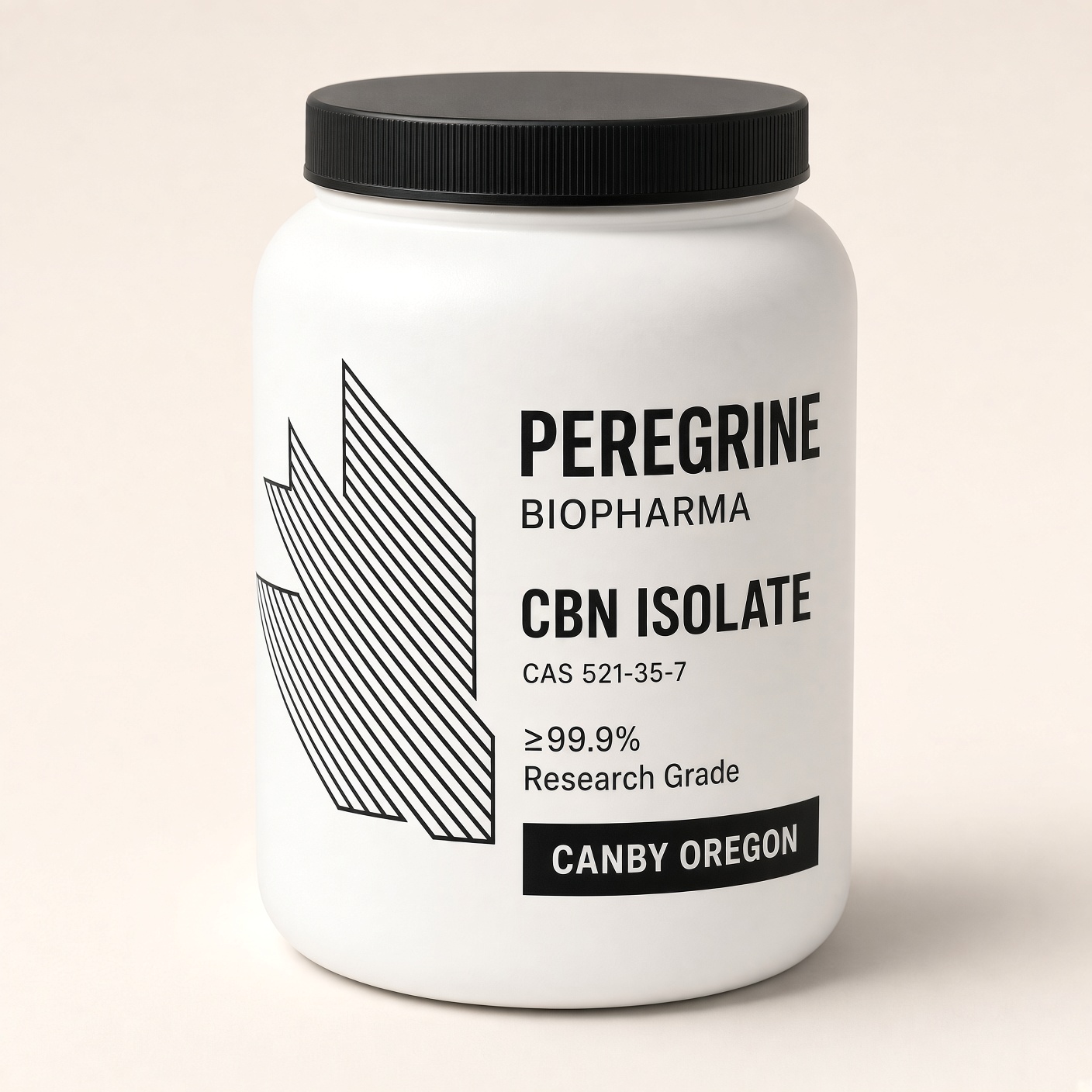
CBNC21H26O2310.43 g/mol
CBN isolate (≥99.9%)
CAS 521-35-7
5 g – 100 g · Contact for pricing
Request pricing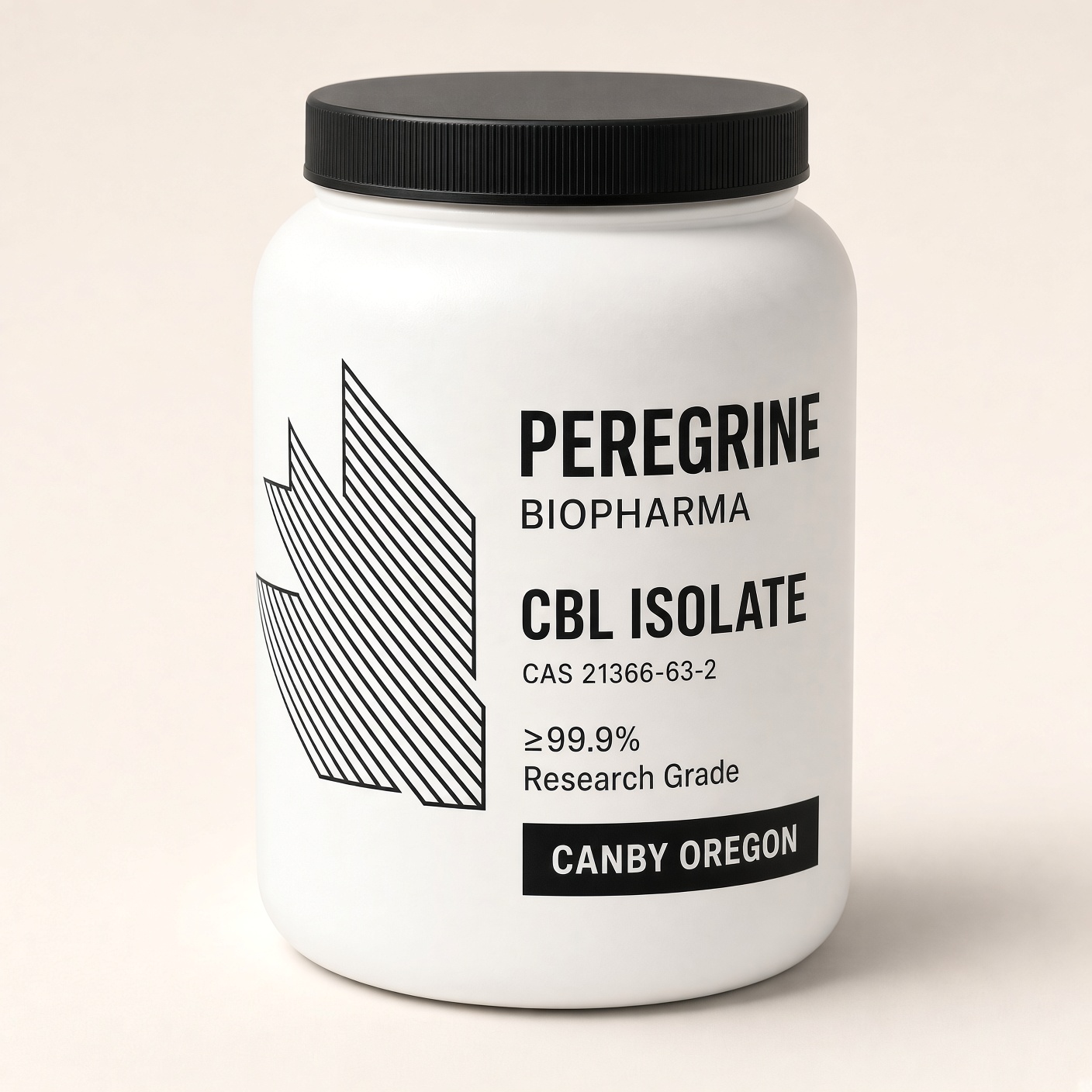
CAS 21366-63-2
Coming soon
CBL (cannabicyclol) is a photochemical rearrangement product of CBC: light cyclises CBC into CBL. It shares CBC's formula, C21H30O2, so it cannot be told from CBC by mass alone, only by chromatography or structural identity. Peregrine sells it as a research isolate for reference libraries and impurity mapping, not as a finished consumer cannabinoid.
Specification sheet (PDF) · one page, forwardable; the lot COA carries the measured values
Masses
Select a mass, or start with the 5 g sample.
How we sell
01
Tell us the compound, the mass, and the destination, and give us a work email. We don’t publish prices because they depend on the lot.
02
A person replies within one business day with the available lot, lead time, and price.
03
You confirm the mass and destination on a purchase order. There is no consumer checkout.
04
The pack ships with the COA covering identity and assay if you asked for it. An SDS is available on request.
CBL isolate · one business day
Typical commercial demand is 5 g–1 kg. Larger mass tiers stay on Coming Soon until a campaign is scheduled.
Multi-product or full procurement details? Use the procurement form.
Buying guide
CBL isolate is cannabicyclol (CAS 21366-63-2, C21H30O2), the photochemical rearrangement product of CBC, at ≥99.9%. It is not made by a plant enzyme; it forms when CBC is exposed to light, which is why it appears in aged material and in stability studies. Peregrine offers it as a research-grade isolate for analytical libraries and impurity mapping. Typical demand is 5 g to 1 kg; larger tiers stay Coming Soon until a campaign is scheduled. A per-lot COA ships with the material.
Because CBL is what CBC becomes under light. Any product containing CBC will show CBL over time, so stability programmes, impurity mapping and method validation need an identified CBL reference to name the peak. It shares CBC's formula (C21H30O2) but has a distinct cyclised structure, so it is resolved chromatographically and confirmed by identity, not assumed.
Typically by controlled photochemical conversion of CBC followed by chromatographic purification and crystallisation. Because it is produced on demand rather than harvested, campaign sizes are small and kilogram tiers open only against a written campaign.
Identity and assay for the named cannabinoid, at minimum. Identity is HPLC against a qualified reference standard; when a primary standard is on allocation, Peregrine discloses NMR or LC-MS identity on the COA rather than implying HPLC. Assay is reported as percent w/w of CBL, and a lot is listed as Available only after both clear.
Residual-solvent (ICH Q3C classes as applicable to the process), heavy-metal and pesticide panels ship with the lot pack when you request them on the inquiry. Appearance, water activity, storage condition and origin are lot-specific and printed on the COA, not on this page. Identity matters more than usual here: CBL and CBC share a formula, so a mass alone does not distinguish them.
Ambient, dry and dark unless the COA says otherwise. CBL is the more light-stable end of the CBC → CBL conversion, but the container should still be kept closed and out of light.
Pick a mass on this page, add the destination jurisdiction, and send the inquiry. A person answers with a quote in one business day. Today every CBL isolate mass tier is Coming Soon: production is campaign-based and a tier opens only after the lot clears identity and assay. Send the inquiry anyway — it is how you are told when the campaign is scheduled, and the 5 g research cut is the first tier to open. Typical commercial demand is 5 g to 1 kg.
Every mass tier shows one of three states: Available (identity and assay have cleared), Contact for pricing (a human quotes the campaign), or Coming Soon (we cannot take the order until the lot exists). Incoterms, carrier and pickup window are on the quote. For multi-product requests use the procurement form on /quote.
Compare: CBC vs CBL · What is CBL · What are minor cannabinoids · How to read a COA · Storage
CBC. Light rearranges cannabichromene into cannabicyclol; there is no CBL synthase in the plant.
Peregrine sells it as a research isolate for analytical and stability work and does not describe consumer uses.
≥99.9% cannabicyclol on the lot COA, identity-confirmed.
It is produced on demand for research; typical demand is 5 g to 1 kg, and tiers open per campaign.
Yes, C21H30O2 — but a different structure. That is why identity, not mass, confirms it.
So an analytical method can name the CBL peak with a confirmed reference. Most orders are between 5 g and 1 kg.
CBNC21H26O2310.43 g/mol
CAS 521-35-7
5 g – 100 g · Contact for pricing
Request pricing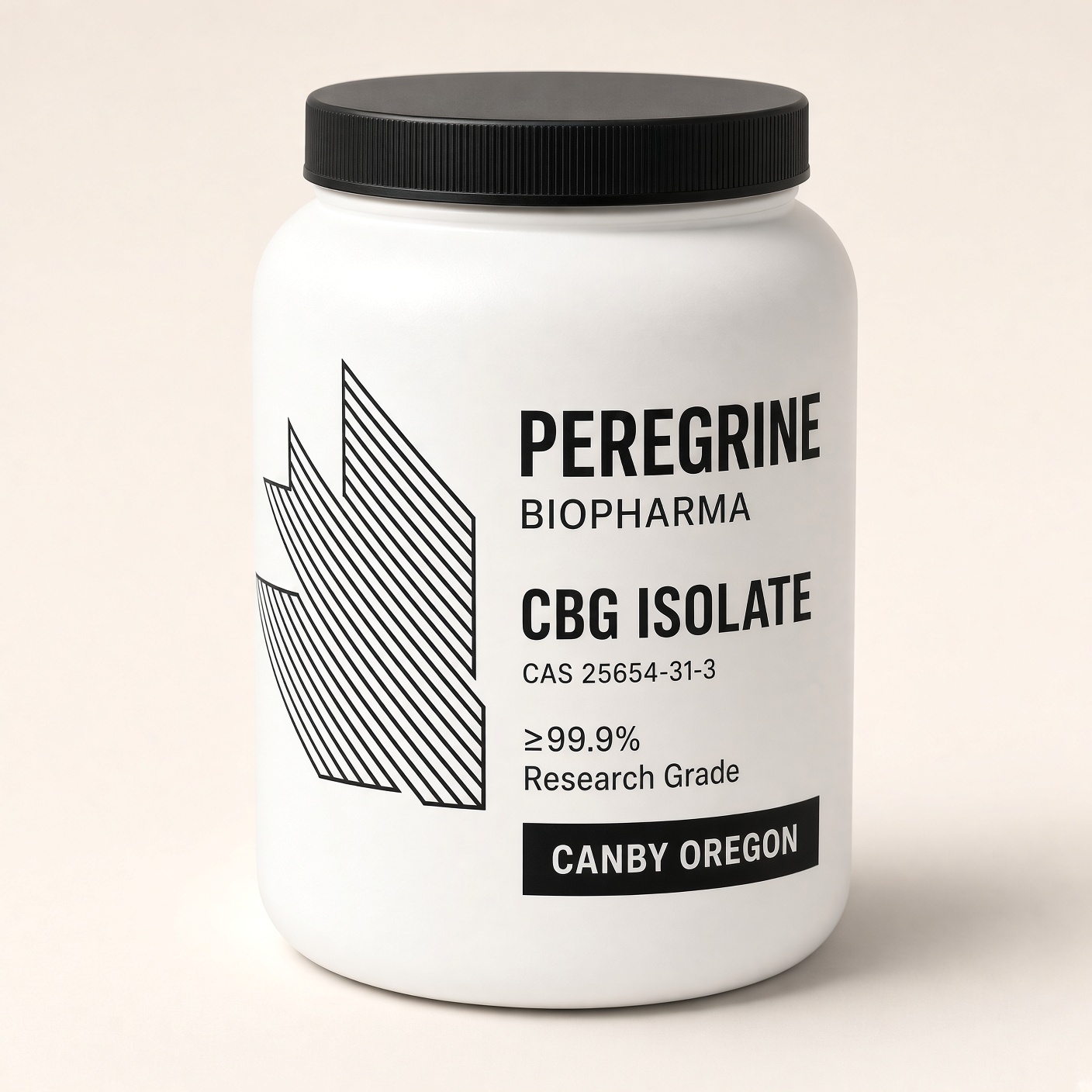
CBGC21H32O2316.48 g/mol
CAS 25654-31-3
5 g – 1 kg · Contact for pricing
Request pricing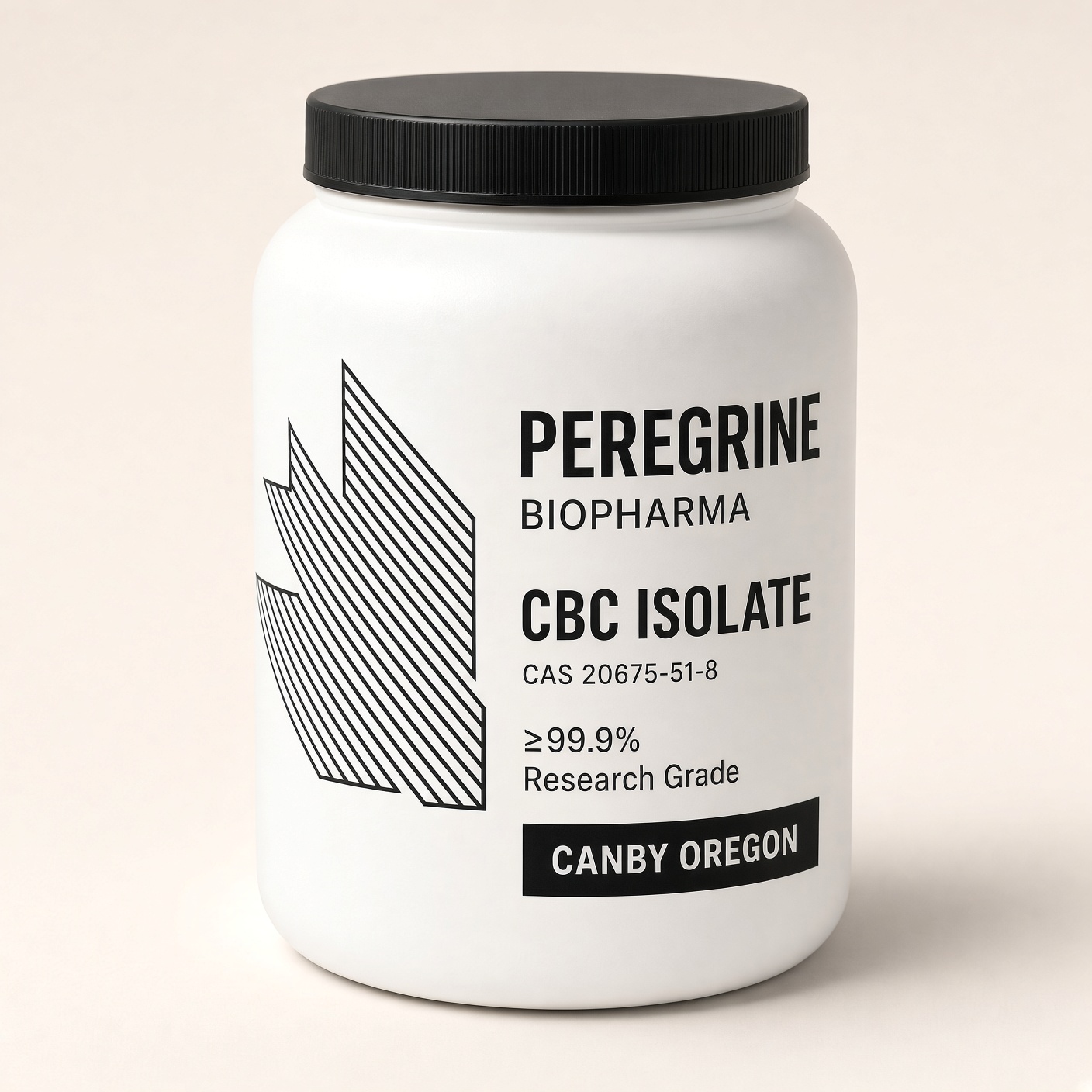
CBCC21H30O2314.47 g/mol
CAS 20675-51-8
5 g · Contact for pricing
Request pricing