
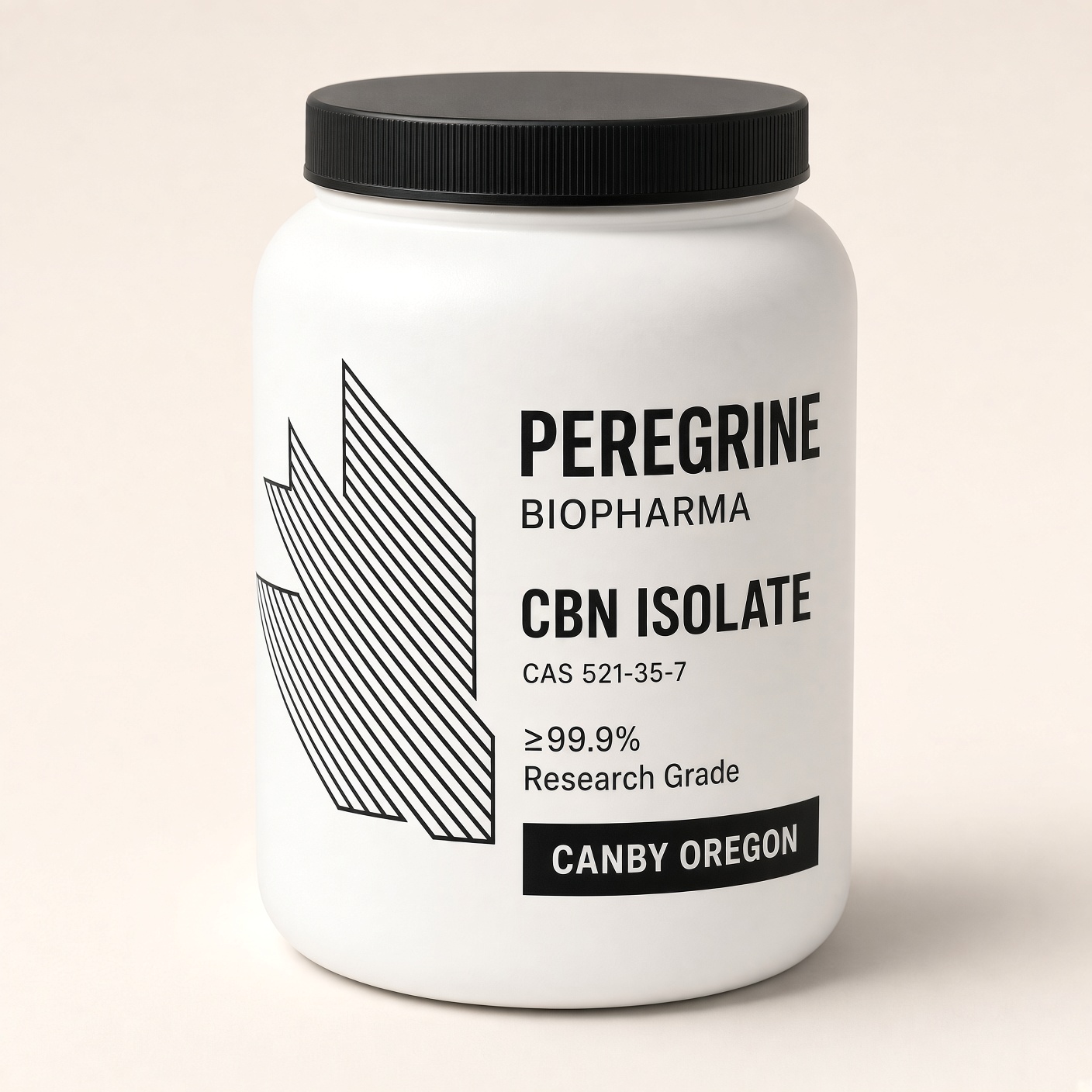
CBNC21H26O2310.43 g/mol
CBN isolate (≥99.9%)
CAS 521-35-7
5 g – 100 g · Contact for pricing
Request pricing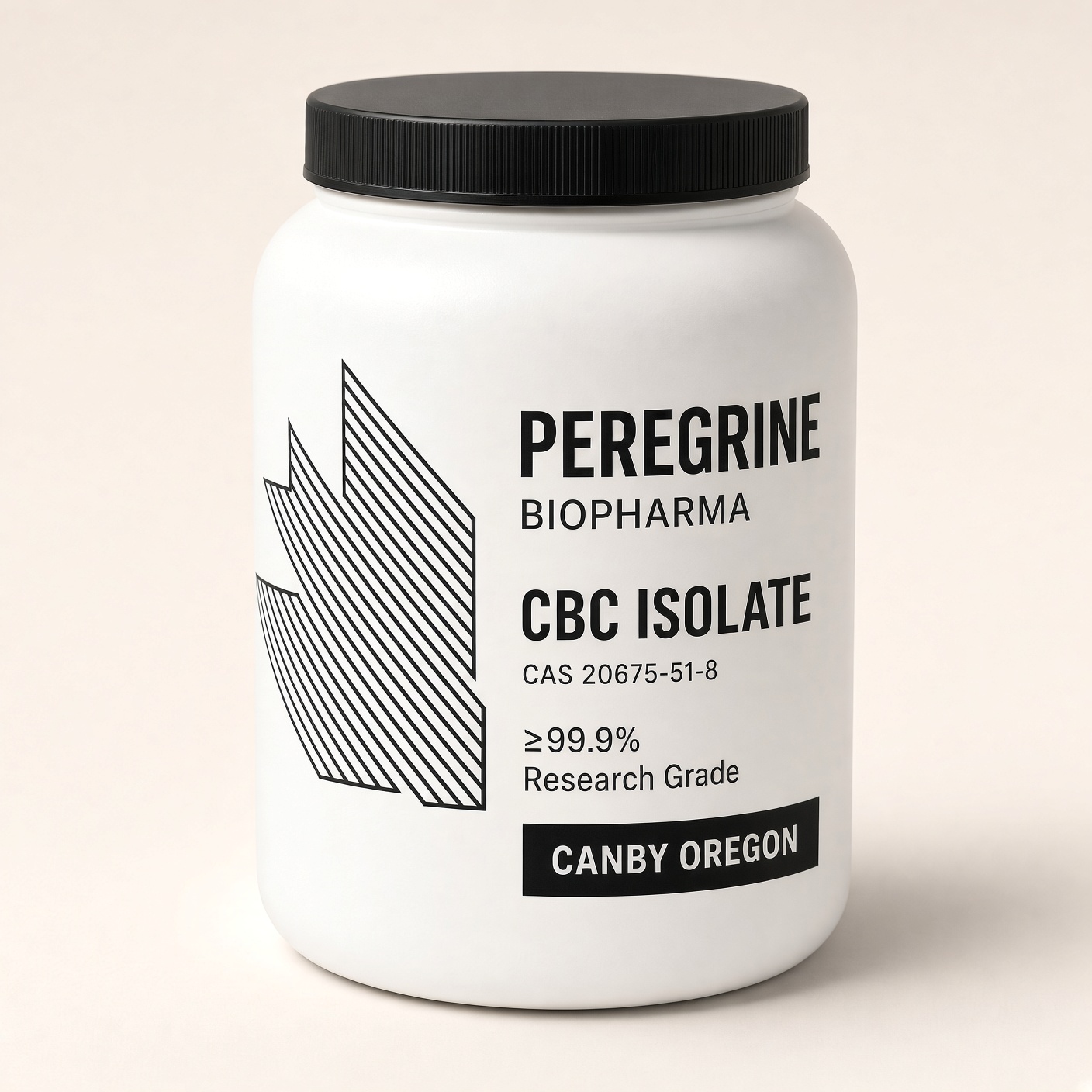
CAS 20675-51-8
5 g · Contact for pricing
CBC (cannabichromene) is a non-intoxicating phytocannabinoid. CBCA synthase converts CBGA to CBCA, and heat removes CO₂ to give CBC. It is one of three competing branches off the shared acid, alongside THCA and CBDA. It shares the formula C21H30O2 with CBD and THC but carries a chromene ring, which gives it different laboratory pharmacology.
Specification sheet (PDF) · one page, forwardable; the lot COA carries the measured values
Masses
Selected 5 g. Request below.
How we sell
01
Tell us the compound, the mass, and the destination, and give us a work email. We don’t publish prices because they depend on the lot.
02
A person replies within one business day with the available lot, lead time, and price.
03
You confirm the mass and destination on a purchase order. There is no consumer checkout.
04
The pack ships with the COA covering identity and assay if you asked for it. An SDS is available on request.
CBC isolate · 5 g · one business day
CBC is thermally sensitive relative to CBD. Request the current physical form on the inquiry so packaging (amber vial vs. jar) matches the lot.
Multi-product or full procurement details? Use the procurement form.
Buying guide
Bulk CBC isolate is cannabichromene (CAS 20675-51-8, C21H30O2) at ≥99.9%, supplied by Peregrine as either a high-assay viscous fraction or a crystalline lot depending on the campaign. CBC is one of the three cannabinoids the plant makes directly from CBGa and is thermally more sensitive than CBD, so the physical form of the current lot is confirmed on the inquiry and packaging is matched to it. Masses run 5 g to 100 kg with a per-lot COA; quotes return in one business day.
Cannabichromene has a low melting point and crystallises reluctantly; at high assay it can present as a viscous, pale oil at room temperature or as a solid, depending on purity, residual minor cannabinoids and how the final step was run. Both are ≥99.9% CBC on the COA. State the physical form you need on the inquiry so the lot and the container (amber vial versus jar) match.
CBCa is a direct product of CBGa in the plant. Producers extract, winterise and decarboxylate as for other neutrals, then separate CBC from CBD and CBG by chromatography — the three are close in polarity, which is why CBC isolate is scarcer and typically more expensive than CBD.
Identity and assay for the named cannabinoid, at minimum. Identity is HPLC against a qualified reference standard; when a primary standard is on allocation, Peregrine discloses NMR or LC-MS identity on the COA rather than implying HPLC. Assay is reported as percent w/w of CBC, and a lot is listed as Available only after both clear.
Residual-solvent (ICH Q3C classes as applicable to the process), heavy-metal and pesticide panels ship with the lot pack when you request them on the inquiry. Appearance, water activity, storage condition and origin are lot-specific and printed on the COA, not on this page.
Ambient, dry and dark unless the COA says otherwise, and away from heat sources. CBC is thermally sensitive relative to CBD, so avoid prolonged warming during dispensing; if a solid lot has softened, weigh by assay from the container rather than reheating repeatedly.
Pick a mass on this page, add the destination jurisdiction, and send the inquiry. A person answers with a quote in one business day. For CBC isolate, 5 g is quoted today; every larger mass stays Coming Soon until a campaign is scheduled and the lot clears release. State the physical form you need on the inquiry.
Every mass tier shows one of three states: Available (identity and assay have cleared), Contact for pricing (a human quotes the campaign), or Coming Soon (we cannot take the order until the lot exists). Incoterms, carrier and pickup window are on the quote. For multi-product requests use the procurement form on /quote.
Compare: CBC vs CBL · What are minor cannabinoids · How are cannabinoids made in the plant · How to read a COA · Storage
Either, depending on the lot. Peregrine confirms the current physical form on the inquiry and packages to match.
≥99.9% cannabichromene, reported as percent w/w on the lot COA.
No. CBL (cannabicyclol) is the photochemical rearrangement product of CBC. They share a formula but not a structure.
5 g research cut. Campaign masses on quote.
Not by default — ambient, dry and dark — but keep it away from heat and read the lot COA for any exception.
No. CBC is treated as non-intoxicating because it does not activate CB1 the way Δ9-THC does. That is a receptor description, not a statement about how it feels.
Both are non-intoxicating branches from CBGA with different rings and different laboratory pharmacology. CBD has a large human literature; CBC has almost none.
CBNC21H26O2310.43 g/mol
CAS 521-35-7
5 g – 100 g · Contact for pricing
Request pricing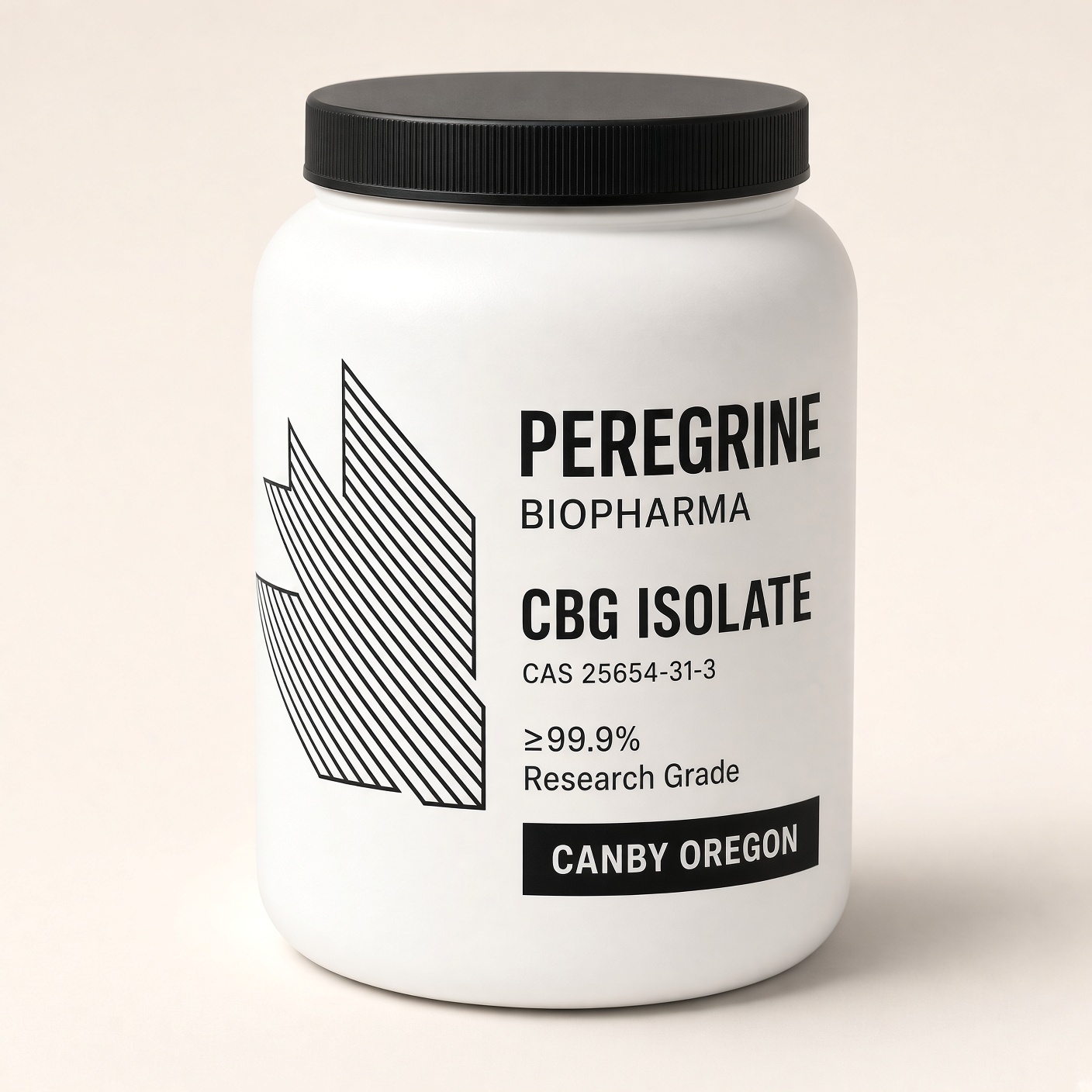
CBGC21H32O2316.48 g/mol
CAS 25654-31-3
5 g – 1 kg · Contact for pricing
Request pricing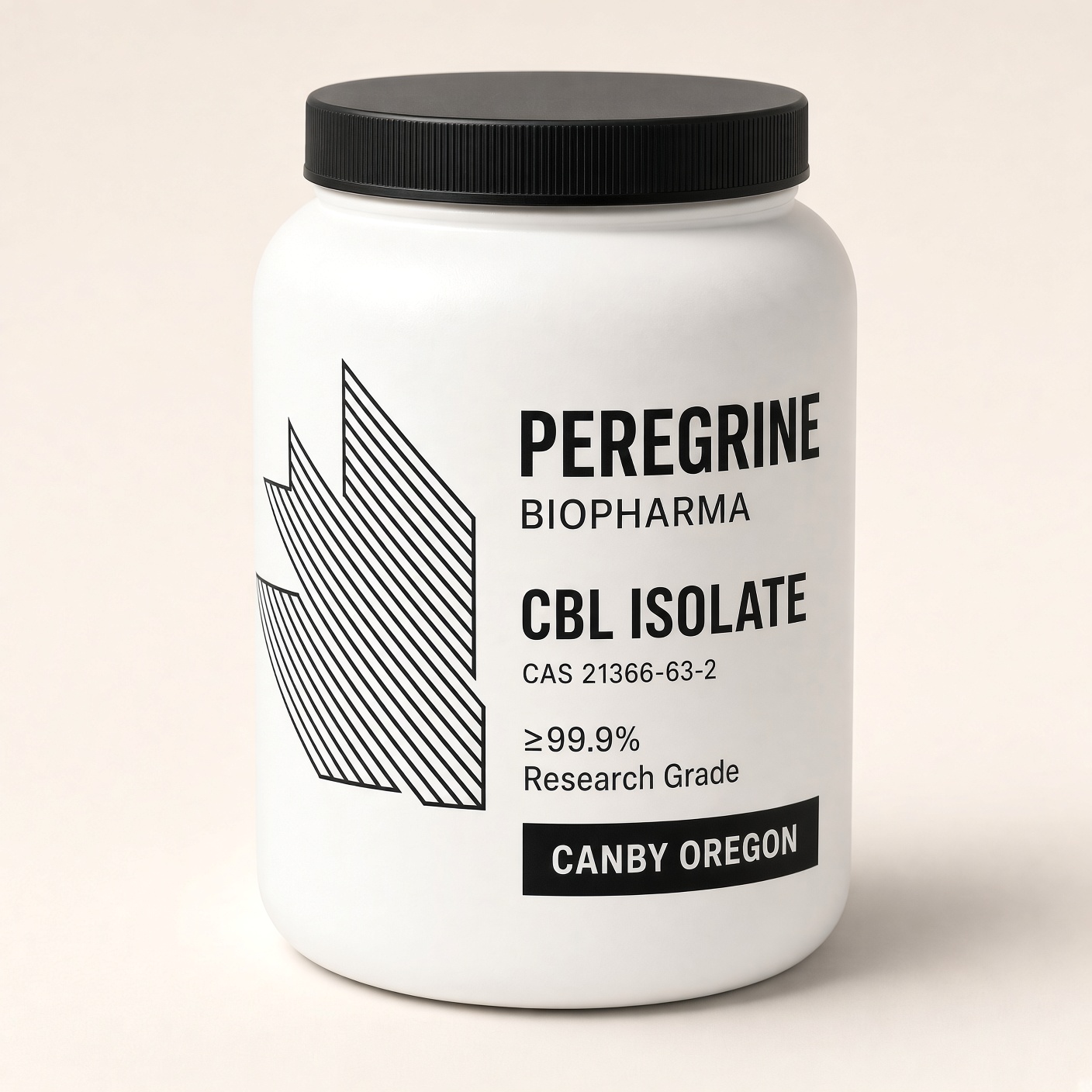
CBLC21H30O2314.47 g/mol
CAS 21366-63-2
Coming soon, no lot listed yet
See the spec