
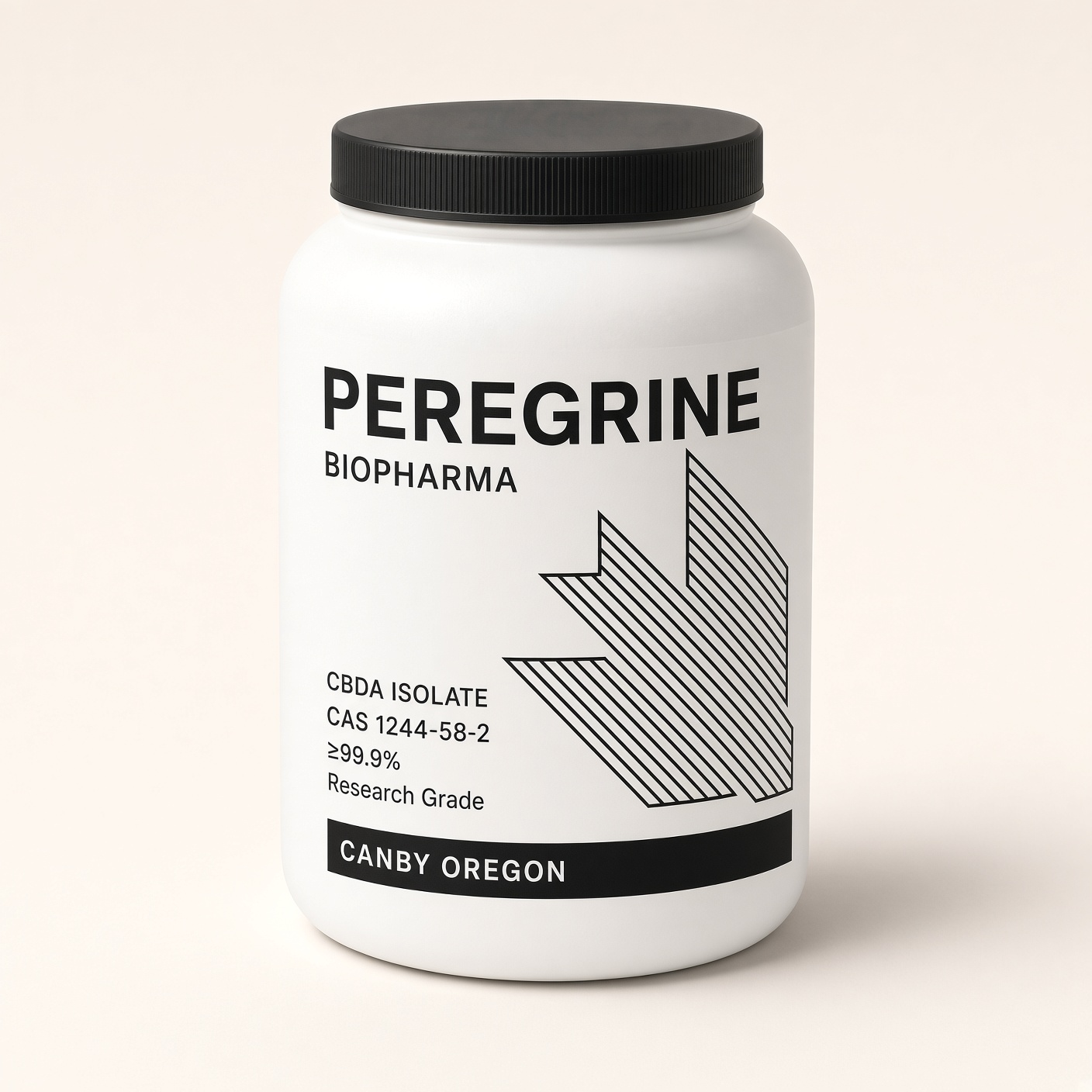
CBDAC22H30O4358.47 g/mol
CBDA isolate (≥99.9%)
CAS 1244-58-2
5 g · Contact for pricing
Request pricing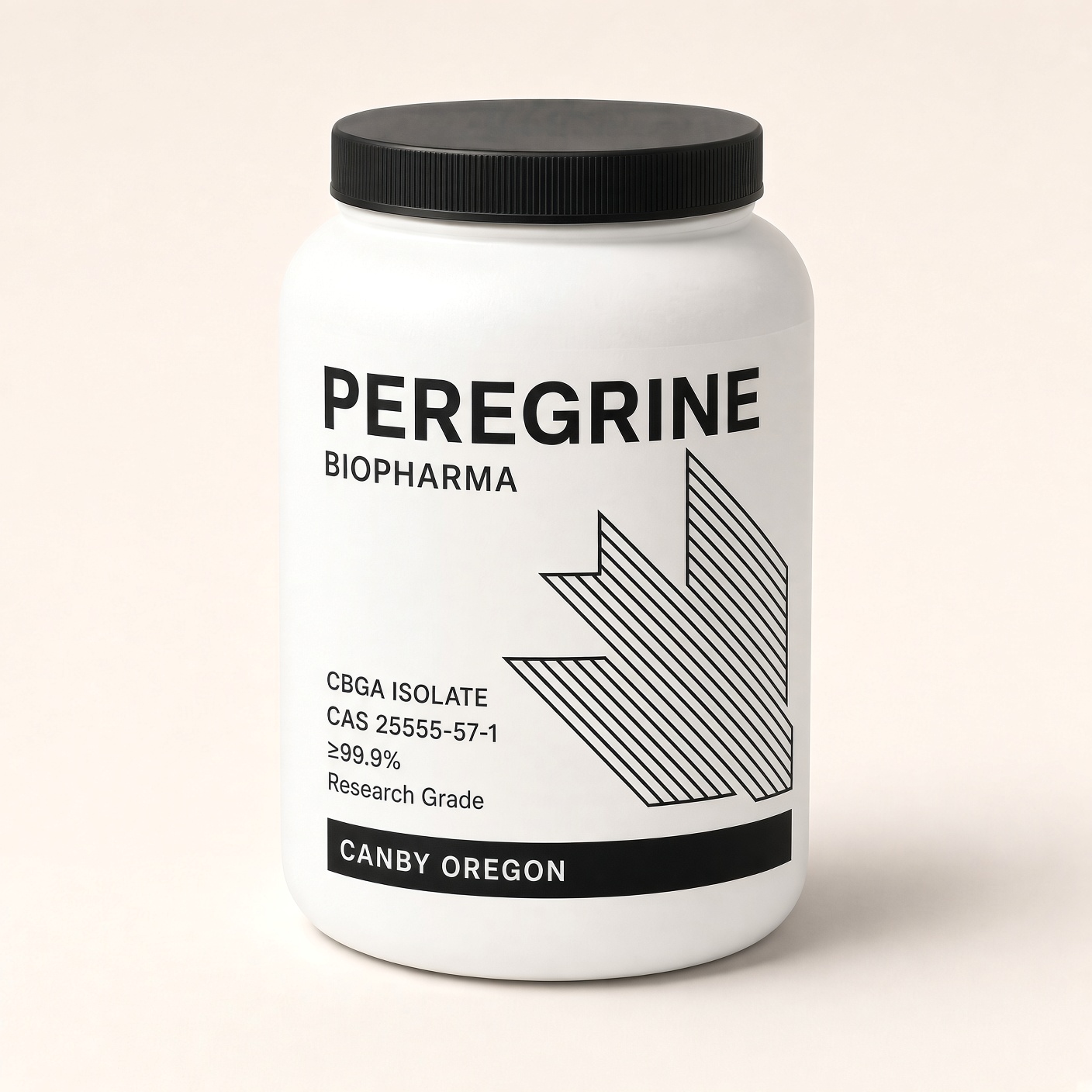
CAS 25555-57-1
5 g – 1 kg · Contact for pricing
CBGa (cannabigerolic acid) is the acidic precursor the entire pentyl cannabinoid family is built from. THCA synthase, CBDA synthase and CBCA synthase compete for it in the plant. Heat removes CO₂ from the carboxyl group and yields neutral CBG, which is why the acid is stored cold and handled differently from the neutral.
Specification sheet (PDF) · one page, forwardable; the lot COA carries the measured values
Masses
Selected 5 g. Request below.
How we sell
01
Tell us the compound, the mass, and the destination, and give us a work email. We don’t publish prices because they depend on the lot.
02
A person replies within one business day with the available lot, lead time, and price.
03
You confirm the mass and destination on a purchase order. There is no consumer checkout.
04
The pack ships with the COA covering identity and assay if you asked for it. An SDS is available on request.
CBGA isolate · 5 g · one business day
Like other acids, CBGA is heat- and light-sensitive. Request residual-solvent and water-activity data with the COA.
Multi-product or full procurement details? Use the procurement form.
Buying guide
Bulk CBGa isolate is cannabigerolic acid (CAS 25555-57-1, C22H32O4), the acidic precursor the plant converts into THCa, CBDa and CBCa. Peregrine supplies it at ≥99.9% as an acidic isolate for process chemistry, reference libraries and work that must start before decarboxylation. Unlike neutral CBG, it is heat- and light-sensitive: store at 2–8 °C after receipt. Masses run from 5 g to 100 kg with a per-lot COA; quotes return in one business day.
Because the acid is a different molecule. CBGa carries a carboxylic acid group that CBG has lost; that group changes solubility, melting behaviour and stability, and it is the species the three plant synthases actually use. Analytical labs buy CBGa as a reference and impurity marker; process chemists buy it as a starting material; formulators buy it when a brief specifies the acid form.
If your specification simply says cannabigerol, you want CBG isolate. If it says the acid, or the work involves controlled decarboxylation, this is the SKU.
Acid-form isolates are typically produced with cold, low-energy extraction and chromatography so the carboxyl group survives, then crystallised without the heating step that neutral isolates receive. Every stage that adds heat, light or time converts a fraction of the acid to CBG, so the assay on a CBGa lot is also a statement about how it was handled.
Peregrine's release rule is the same as for every isolate: Available only after identity and assay clear. Ask for water-activity data with the COA; acids are more sensitive to it than neutrals.
Identity and assay for the named cannabinoid, at minimum. Identity is HPLC against a qualified reference standard; when a primary standard is on allocation, Peregrine discloses NMR or LC-MS identity on the COA rather than implying HPLC. Assay is reported as percent w/w of CBGa, and a lot is listed as Available only after both clear.
Residual-solvent (ICH Q3C classes as applicable to the process), heavy-metal and pesticide panels ship with the lot pack when you request them on the inquiry. Appearance, water activity, storage condition and origin are lot-specific and printed on the COA, not on this page. For an acid, the CBG content on the same COA tells you how much decarboxylation has already occurred.
2–8 °C after receipt, closed, dry and dark. Allow the container to reach room temperature before opening so moisture does not condense on the solid. Plan weighings so the bulk container is opened as rarely as possible; sub-divide into working aliquots if the campaign runs for weeks.
Pick a mass on this page, add the destination jurisdiction, and send the inquiry. A person answers with a quote in one business day. For CBGa isolate, 5 g, 100 g and 1 kg are quoted today; every larger mass stays Coming Soon until a campaign is scheduled and the lot clears release.
Every mass tier shows one of three states: Available (identity and assay have cleared), Contact for pricing (a human quotes the campaign), or Coming Soon (we cannot take the order until the lot exists). Incoterms, carrier and pickup window are on the quote. For multi-product requests use the procurement form on /quote.
Compare: CBG vs CBGa: acid or neutral · What are cannabinoid acids · What is cannabinoid decarboxylation · How to read a COA · Storage
No. CBGa is the carboxylic acid (C22H32O4); CBG is the decarboxylated neutral (C21H32O2). Heat, light and time convert one to the other.
2–8 °C after receipt, in the closed food-grade container, protected from light.
Any process step with heat will convert some of it. Measure the CBG:CBGa ratio after processing rather than assuming the incoming assay survives.
A lot COA with identity and assay; SDS, residual-solvent, heavy-metal and pesticide panels when requested on the inquiry.
5 g research cut. 100 g and 1 kg are the first campaign steps.
For process chemistry, reference libraries, and any work that has to start before decarboxylation. It does not handle like CBD; we recommend a cold chain from receipt.
CBDAC22H30O4358.47 g/mol
CAS 1244-58-2
5 g · Contact for pricing
Request pricing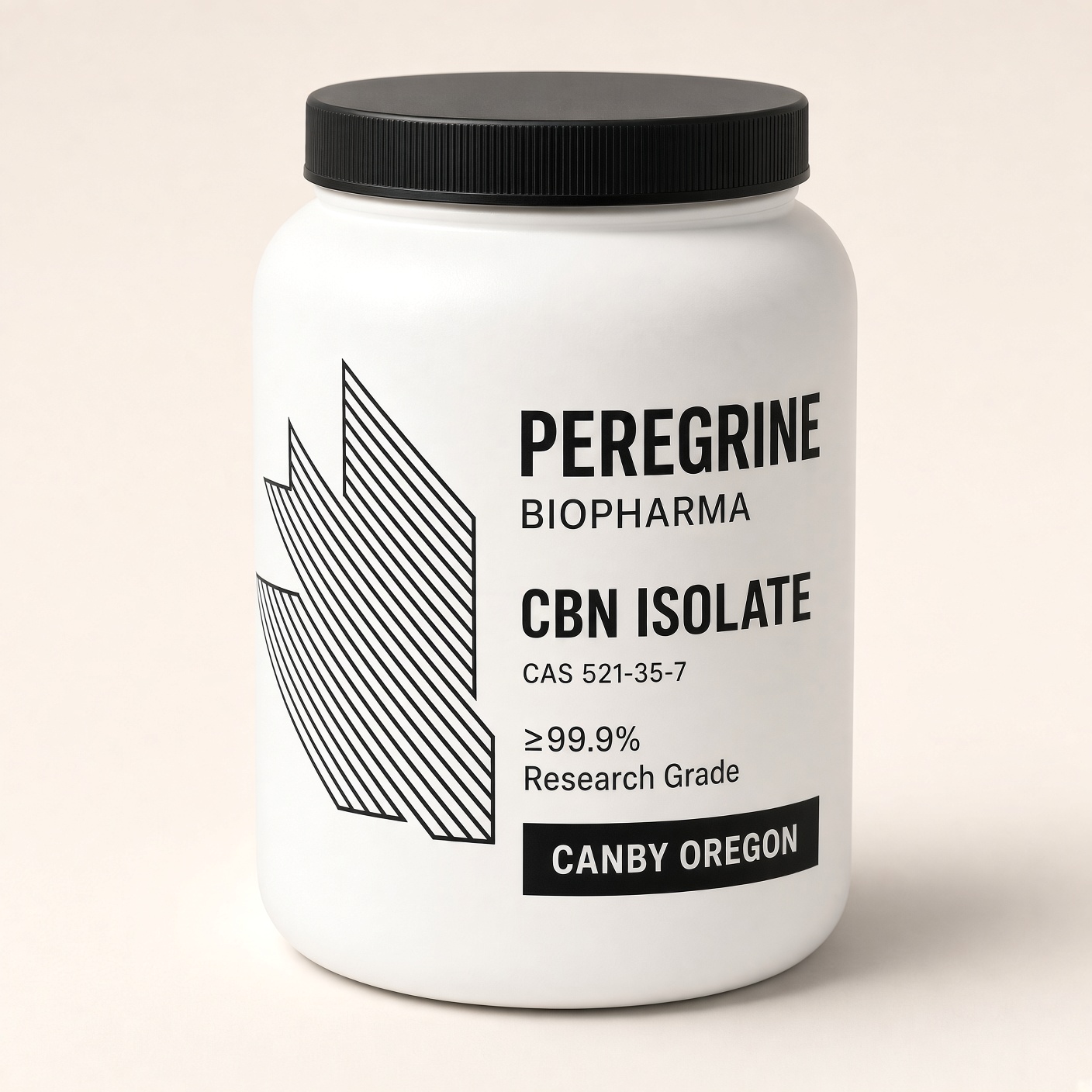
CBNC21H26O2310.43 g/mol
CAS 521-35-7
5 g – 100 g · Contact for pricing
Request pricing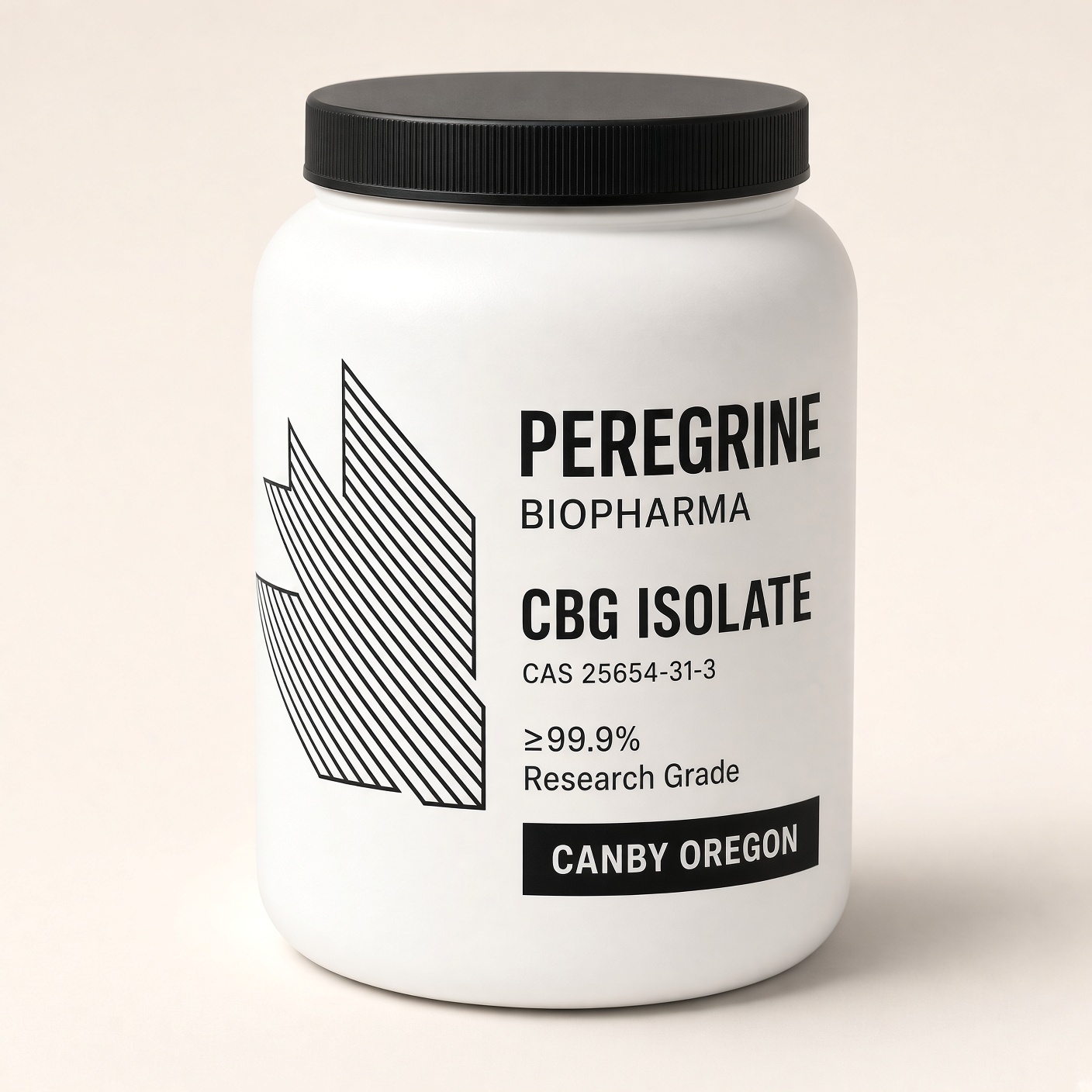
CBGC21H32O2316.48 g/mol
CAS 25654-31-3
5 g – 1 kg · Contact for pricing
Request pricing